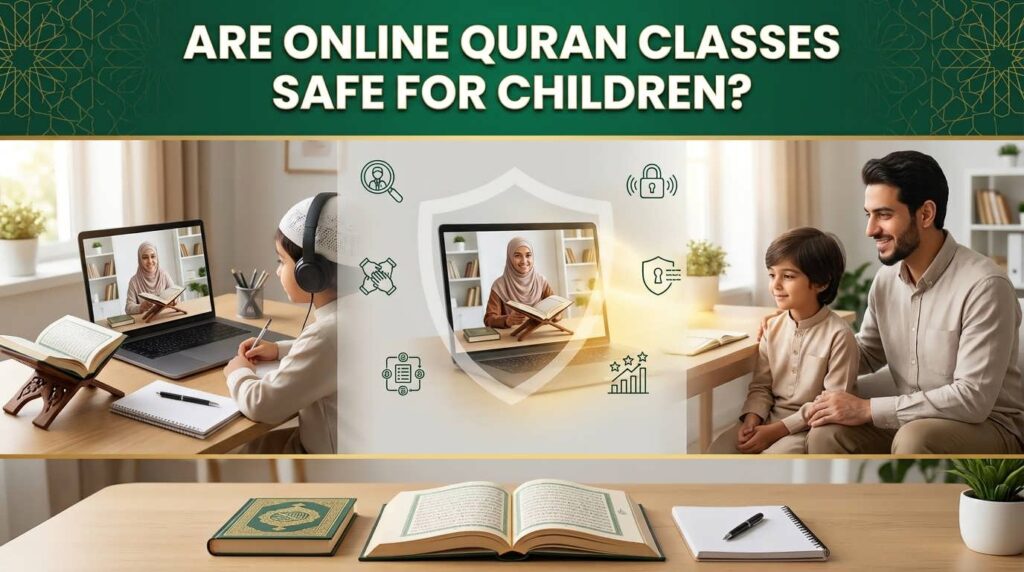
Yes, online Quran classes can be safe for children when parents choose a reputable academy with qualified teachers, secure learning platforms, transparent communication, and clear safeguarding practices. Parent involvement, trial classes, and a structured learning environment further help create a safe and positive online learning experience.
For many parents, safety is the first question that comes to mind before enrolling their child in online Quran classes. While online learning offers flexibility and access to qualified teachers, it’s natural to wonder how lessons are conducted, how children are protected, and what measures reputable academies take to ensure a secure learning environment.
The good news is that online Quran classes can provide a safe, effective, and engaging educational experience when families choose the right academy and follow a few simple best practices. This guide explains what makes online Quran classes safe, the warning signs to avoid, and how parents can confidently support their child’s Quran learning journey.
Why Parents Ask This Question
Unlike traditional classrooms, online Quran lessons take place through digital platforms. Parents want reassurance that their children will learn in an environment that is respectful, professional, and secure.
Questions such as these are completely reasonable:
- Who will teach my child?
- Can I observe the lessons?
- Which platform will be used?
- How is my child’s privacy protected?
- What if my child feels uncomfortable?
A trustworthy academy should answer these questions openly before enrollment.
Fact #1: Choosing the Right Academy Is the Most Important Safety Factor
The safety of online Quran classes depends far more on the academy than on the technology itself.
A reputable academy should provide:
- Qualified Quran teachers
- Transparent communication
- Professional scheduling
- Clear policies
- Structured lessons
- Responsive support for parents
If an academy is reluctant to answer basic questions or provide information about its teaching approach, consider it a warning sign.
Our guide What Makes an Online Quran Academy Trustworthy? explains the qualities parents should look for before making a decision.
Fact #2: Qualified Teachers Create a Safe Learning Environment
Children learn best when they feel comfortable and respected.
Experienced Quran teachers know how to:
- Communicate patiently.
- Encourage questions.
- Correct mistakes kindly.
- Adapt lessons to the child’s age.
- Keep students engaged without unnecessary pressure.
Professional teaching isn’t only about Quran knowledge. It also includes creating an atmosphere where children feel supported throughout every lesson.
Many families also prefer female instructors for young daughters. If that’s important to your family, our article Female Quran Teacher for Kids explains the benefits and what to consider when choosing a teacher.
Fact #3: Parents Can Stay Involved
One of the advantages of online Quran learning is that parents can remain actively involved without interrupting the lesson.
Depending on the child’s age, parents may choose to:
- Sit nearby during the lesson.
- Help younger children log in.
- Review homework together.
- Speak with the teacher about progress.
- Monitor attendance and consistency.
This level of involvement is often easier than with traditional classroom settings.
Fact #4: Secure Learning Platforms Improve Safety
Reputable academies typically use trusted video conferencing platforms that include security features such as password-protected meetings, waiting rooms, and controlled participant access.
Parents should ask:
- Which platform will be used?
- Are meeting links private?
- How are lessons scheduled?
- Who can join the class?
Understanding these procedures provides additional peace of mind before classes begin.
For general guidance on helping children stay safe online, UNICEF provides practical advice for parents through its Guidance on Children’s Online Safety.
Fact #5: A Structured Routine Helps Children Feel Comfortable
Children thrive when lessons follow a predictable routine.
A well-organized online Quran class typically includes:
- Greeting and lesson introduction.
- Revision of previous material.
- New learning objectives.
- Guided Quran reading or Tajweed practice.
- Homework and feedback.
This consistency helps children understand what to expect and makes learning more enjoyable.
If you’re wondering what a typical lesson looks like, our article How Online Quran Classes Work explains the learning process step by step.
Common Safety Concerns Parents Have
Every family has different concerns, but some questions come up repeatedly.
Will My Child Be Alone During Lessons?
Parents may remain nearby whenever they wish, especially during the early stages of learning or with younger children.
Many families find that occasional supervision helps children feel more confident.
Can Teachers Monitor My Child Appropriately?
Professional teachers focus on education, respectful communication, and student progress.
A reputable academy should have clear standards for teacher conduct and communication.
Is My Child’s Information Protected?
Parents should ask how the academy stores student information and whether personal details are shared with third parties.
Professional academies are transparent about their privacy practices and use trusted communication methods.
Warning Signs Parents Should Never Ignore
Most online Quran academies operate professionally, but it’s still important to recognize potential red flags.
Be cautious if an academy:
- Doesn’t explain who its teachers are.
- Refuses to offer a trial class.
- Has unclear pricing or policies.
- Responds inconsistently to parent questions.
- Provides little information about lesson structure.
- Pressures families to enroll immediately.
Trustworthy academies welcome questions because they understand that parents want to make informed decisions.
Safety Starts Before the First Lesson
Many safety concerns can be addressed before classes even begin.
Parents can prepare by:
- Attending the trial lesson.
- Meeting the teacher.
- Testing the technology.
- Setting up a quiet learning space.
- Discussing online etiquette with their child.
These simple steps create a positive foundation for long-term Quran learning.
If you’re preparing your child’s study area, our guide What Equipment Do You Need for Online Quran Classes? explains how to create a comfortable and distraction-free learning environment.
Best Practices for Parents During Online Quran Classes
Parents don’t need to supervise every minute of every lesson, but staying involved can make the learning experience safer and more productive.
Here are a few simple practices that many families find helpful:
- Attend the first trial class with your child.
- Introduce yourself to the teacher before lessons begin.
- Create a dedicated study space at home.
- Encourage your child to ask questions if something is unclear.
- Check in regularly about what your child is learning.
- Keep communication open with the academy.
This balanced approach helps children become independent learners while giving parents confidence that everything is progressing well.
How to Choose a Safe Online Quran Academy
Before enrolling, compare academies carefully rather than making a decision based only on price or advertising.
A trustworthy academy should demonstrate:
- Qualified and experienced Quran teachers.
- Transparent pricing and policies.
- A structured learning curriculum.
- Professional communication.
- Flexible scheduling.
- Regular progress updates.
- A free trial class.
- Respect for student privacy.
Choosing an academy with these qualities significantly reduces potential concerns and creates a better learning experience for both parents and children.
Are One-on-One Quran Classes Safe for Children?
Many parents ask whether one-on-one lessons are appropriate for younger learners.
When provided by a reputable academy with professional teachers and clear communication, one-on-one classes can be an excellent option because they offer:
- Individual attention.
- Immediate pronunciation correction.
- Lessons adapted to the child’s pace.
- Better engagement.
- Faster progress.
Parents can also choose to remain nearby during lessons, particularly for younger children, until everyone feels comfortable with the routine.
How QuranJourney Prioritizes Child Safety
At QuranJourney, we understand that parents place enormous trust in the academy they choose.
That’s why our approach focuses on creating a respectful, professional, and supportive learning environment for every student.
Our online Quran classes include:
- Qualified and experienced Quran teachers.
- Live one-on-one lessons.
- Structured learning plans.
- Flexible scheduling for international families.
- Regular communication and progress updates.
- Transparent enrollment process.
- Free trial classes before registration.
For families who prefer female instructors for daughters or younger children, we also provide qualified female Quran teachers whenever available and appropriate.
If you’d like to see how our classes work before making a decision, you can book a Free Trial Class and meet one of our teachers in a comfortable, no-obligation session.
Conclusion
So, are online Quran classes safe for children? Yes, they can be very safe when families choose a reputable academy that values professionalism, transparency, and student well-being.
Qualified teachers, secure learning platforms, clear communication, and parent involvement all contribute to creating a positive online learning experience. By asking the right questions, attending a trial class, and selecting an academy with strong educational standards, parents can confidently support their child’s Quran learning journey from home.
The goal isn’t simply to find online classes. It’s to find an academy where children can learn the Quran with confidence, consistency, and care.
Frequently Asked Questions
Are online Quran classes safe for young children?
Yes. Young children can safely attend online Quran classes when lessons are delivered by qualified teachers through a reputable academy. Parent involvement, especially during the first few lessons, provides additional reassurance.
Should parents attend the first online Quran lesson?
Yes. Attending the first lesson helps parents understand the teaching style, meet the teacher, and ensure their child feels comfortable with the online learning environment.
How can I verify an online Quran teacher?
Ask about the teacher’s qualifications, teaching experience, curriculum, and communication methods. A trustworthy academy should answer these questions openly and offer a trial class before enrollment.
Are one-on-one online Quran classes better for children?
For many children, yes. One-on-one lessons allow teachers to focus on individual learning needs, correct pronunciation immediately, and adjust the pace according to the student’s progress.
What if my child feels shy during online classes?
This is common during the first few lessons. Patient teachers gradually build confidence through encouragement, interactive activities, and a supportive learning environment.
Can parents monitor online Quran classes?
Yes. Parents are welcome to remain nearby, especially for younger learners. Many academies also provide regular progress updates and encourage communication with families.
What should I do if I have concerns during the course?
Contact the academy as soon as possible. Professional academies encourage parent feedback and address questions promptly to maintain a positive learning experience.
What is the safest way to choose an online Quran academy?
Research the academy carefully, attend a trial class, verify teacher qualifications, review communication practices, and ensure the academy provides clear policies regarding student safety and privacy.