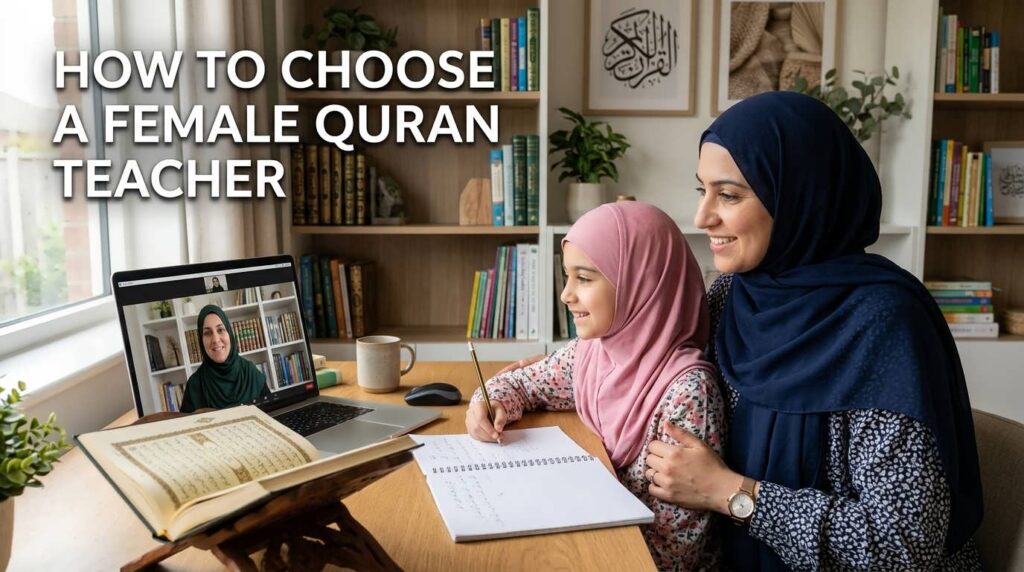
To choose a female Quran teacher, look for strong Quranic knowledge, Tajweed expertise, teaching experience, clear communication skills, and a structured learning approach. A good teacher should also match the student’s learning needs, provide regular feedback, and create a comfortable environment that encourages consistent progress.
Finding the right Quran teacher can have a lasting impact on a student’s Quranic journey. Whether you are a parent searching for a teacher for your daughter or an adult sister looking to improve your recitation, Tajweed, or Islamic knowledge, choosing the right instructor is an important decision.
Today, online learning has made it possible to connect with qualified female Quran teachers from around the world. However, with so many options available, many families and students wonder how to identify a teacher who is knowledgeable, trustworthy, and compatible with their learning goals.
- Why Choosing the Right Female Quran Teacher Matters
- What Qualifications Should a Female Quran Teacher Have?
- Tajweed Knowledge Is Essential
- Teaching Experience Matters
- Look for Strong Communication Skills
- Evaluate the Teaching Style
- Consider the Student's Age and Learning Needs
- One-on-One vs Group Classes
- Ask About Progress Tracking
- Read Reviews and Seek Recommendations
- Always Take a Trial Class
- Questions to Ask Before Choosing a Female Quran Teacher
- Signs of a High-Quality Female Quran Teacher
- Beyond Recitation: Supporting Islamic Growth
- Online Female Quran Teachers vs Local Teachers
- Conclusion
- Frequently Asked Questions
Why Choosing the Right Female Quran Teacher Matters
A Quran teacher does more than teach reading and memorization.
A qualified teacher helps students:
- Develop correct Quran recitation
- Learn Tajweed properly
- Build confidence
- Stay motivated
- Establish consistent learning habits
- Strengthen their connection with the Quran
The right teacher can make learning enjoyable and productive, while the wrong fit may lead to frustration and slow progress.
What Qualifications Should a Female Quran Teacher Have?
One of the first things to consider is the teacher’s educational background.
A qualified Quran teacher should possess strong knowledge in areas such as:
- Quran recitation
- Tajweed rules
- Arabic reading
- Noorani Qaida
- Quran memorization
- Basic Islamic studies
While formal certifications can be helpful, practical teaching ability is equally important.
The goal is to find a teacher who can accurately teach and effectively communicate Quranic knowledge.
Tajweed Knowledge Is Essential
Many students seek Quran classes specifically to improve recitation.
For this reason, Tajweed expertise should be a priority.
A teacher should be able to:
- Correct pronunciation mistakes
- Explain Tajweed rules clearly
- Demonstrate proper recitation
- Identify recurring errors
- Monitor student improvement
The importance of proper Quran recitation is emphasized throughout Islamic scholarship and can be explored further through trusted resources such as Quran.com.
Teaching Experience Matters
Knowledge alone does not automatically make someone an effective teacher.
Experienced instructors typically understand how to:
- Teach different age groups
- Adapt lessons to various learning styles
- Keep students engaged
- Address learning challenges
- Create realistic learning goals
For example, teaching a six-year-old beginner requires a different approach than teaching an adult sister learning Tajweed.
Experience often improves a teacher’s ability to meet individual student needs.
Look for Strong Communication Skills
A teacher may have excellent Quranic knowledge, but students also need clear explanations.
Good communication helps students:
- Understand lessons more quickly
- Feel comfortable asking questions
- Stay engaged during class
- Build confidence
This is one reason many families value a female Quran teacher online, especially for daughters and sisters who may feel more comfortable discussing challenges with a female instructor.
Evaluate the Teaching Style
Every teacher has a unique teaching approach.
Some focus heavily on memorization.
Others emphasize:
- Tajweed
- Quran understanding
- Revision
- Interactive learning
- Structured progression
The best teaching style depends on the student’s goals.
For example:
| Student Goal | Preferred Teaching Focus |
|---|---|
| Learn Quran Reading | Noorani Qaida and Recitation |
| Improve Tajweed | Pronunciation and Rules |
| Memorize Quran | Hifz and Revision |
| Understand Quran | Tafsir and Reflection |
| General Islamic Learning | Quran and Islamic Studies |
A teacher should be able to align lessons with the student’s objectives.
Consider the Student’s Age and Learning Needs
Not every teacher is equally suited to every student.
For Young Children
Look for teachers who demonstrate:
- Patience
- Encouragement
- Child-friendly communication
- Positive reinforcement
For Teenagers
Teachers should be able to maintain engagement while supporting independent learning.
For Adult Sisters
Adult learners often benefit from teachers who offer:
- Flexible scheduling
- Comfortable communication
- Personalized pacing
- Goal-oriented lessons
Students seeking a comfortable learning environment may also find our article on Female Quran Teacher for Sisters helpful.
One-on-One vs Group Classes
When choosing a teacher, consider the learning format.
One-on-One Classes
Advantages include:
- Personalized attention
- Faster feedback
- Customized lessons
- Flexible pacing
Group Classes
Advantages include:
- Peer interaction
- Shared learning experience
- Potentially lower costs
Many students experience faster improvement through individualized instruction, particularly when learning Tajweed or Hifz.
Ask About Progress Tracking
A good teacher should have a system for monitoring improvement.
Progress tracking may include:
- Lesson reviews
- Recitation assessments
- Memorization evaluations
- Attendance records
- Learning milestones
Regular feedback helps students stay motivated and allows parents to monitor development.
Read Reviews and Seek Recommendations
Reviews can provide useful insight into:
- Teaching quality
- Reliability
- Communication
- Student satisfaction
Recommendations from trusted friends, family members, or Islamic communities can also help identify experienced instructors.
However, reviews should complement, not replace, your own evaluation.
Always Take a Trial Class
A trial lesson is one of the best ways to assess a teacher.
During the trial, pay attention to:
Teaching Clarity
Does the teacher explain concepts clearly?
Student Engagement
Does the teacher keep the student focused and involved?
Communication Style
Is the teacher approachable and respectful?
Lesson Structure
Does the lesson feel organized and purposeful?
Many families begin with a free Trial Class before committing to regular lessons.
Questions to Ask Before Choosing a Female Quran Teacher
Before enrollment, consider asking:
- What qualifications do you have?
- How many years of teaching experience do you have?
- Do you teach Tajweed?
- Do you offer Hifz programs?
- How do you track student progress?
- What curriculum do you follow?
- What are your class schedules?
- Do you offer trial lessons?
These questions can help determine whether the teacher is the right fit.
Signs of a High-Quality Female Quran Teacher
The best teachers often share several characteristics.
Patience
Students learn at different speeds.
Consistency
Regular lessons and clear expectations support progress.
Encouragement
Positive reinforcement helps maintain motivation.
Professionalism
Reliable communication and punctuality build trust.
Strong Quranic Knowledge
Students should feel confident in the teacher’s expertise.
These qualities often matter as much as formal credentials.
Beyond Recitation: Supporting Islamic Growth
A quality Quran teacher helps students develop more than reading skills.
Many students also seek guidance in:
- Islamic manners
- Daily worship
- Understanding Quranic teachings
- Personal spiritual development
Students interested in deeper Quranic understanding may benefit from a structured Dars-e-Quran Course.
Those wishing to study authentic Prophetic teachings can explore a Dars-e-Hadith Course alongside trusted resources available at Sunnah.com.
Online Female Quran Teachers vs Local Teachers
Both options can be effective.
| Factor | Online Female Quran Teacher | Local Teacher |
|---|---|---|
| Flexibility | High | Moderate |
| Teacher Selection | Wider Choice | Limited to Local Area |
| Travel Required | No | Yes |
| Personalized Learning | Often Available | Varies |
| Convenience | High | Moderate |
Many families today choose online learning because it provides access to qualified teachers regardless of location.
To better understand the advantages of virtual learning, you may also enjoy reading Why Parents Prefer Female Quran Teachers and Are Online Quran Classes Effective?
Conclusion
Learning how to choose a female Quran teacher is an important step toward successful Quran education. The best teacher is not simply the one with the most qualifications, but the one who combines knowledge, teaching experience, communication skills, patience, and a genuine commitment to student growth.
Whether you are searching for a teacher for your daughter, a teenage student, a revert sister, or yourself, taking time to evaluate qualifications, teaching style, and compatibility can help ensure a positive and productive learning experience.
If you’re ready to begin your Quran learning journey, consider starting with a free Trial Class to find a teacher who matches your goals and learning preferences.
You can also learn more about the academy through the About Us page or contact the team directly through the Contact Us page.
Frequently Asked Questions
What should I look for in a female Quran teacher?
Look for Quranic knowledge, Tajweed expertise, teaching experience, communication skills, patience, and a structured teaching approach.
Is teaching experience important?
Yes. Experienced teachers are often better equipped to adapt lessons to different learning styles and age groups.
Should a female Quran teacher know Tajweed?
Absolutely. Proper Tajweed knowledge is essential for teaching correct Quran recitation and pronunciation.
Is a trial class necessary?
A trial class is highly recommended because it allows students and parents to evaluate teaching quality and compatibility before enrolling.
Are online female Quran teachers effective?
Yes. Many students successfully learn Quran recitation, Tajweed, and Hifz through personalized online instruction.
How do I know if a teacher is a good fit?
Observe communication style, lesson structure, student engagement, and how comfortable the student feels during lessons.
Can female Quran teachers teach adults?
Yes. Many female Quran teachers specialize in teaching adult women, including beginners, reverts, and advanced learners.
Should I choose one-on-one or group classes?
The best option depends on your goals. One-on-one classes provide personalized attention, while group classes offer peer interaction and shared learning experiences.