If you have ever sat in the car after a long day, thinking about how you are going to fit one more thing into your child’s week, you are not alone. Between school, homework, sports, and just trying to get everyone fed and into bed on time, finding time for Quran lessons can feel like one task too many.
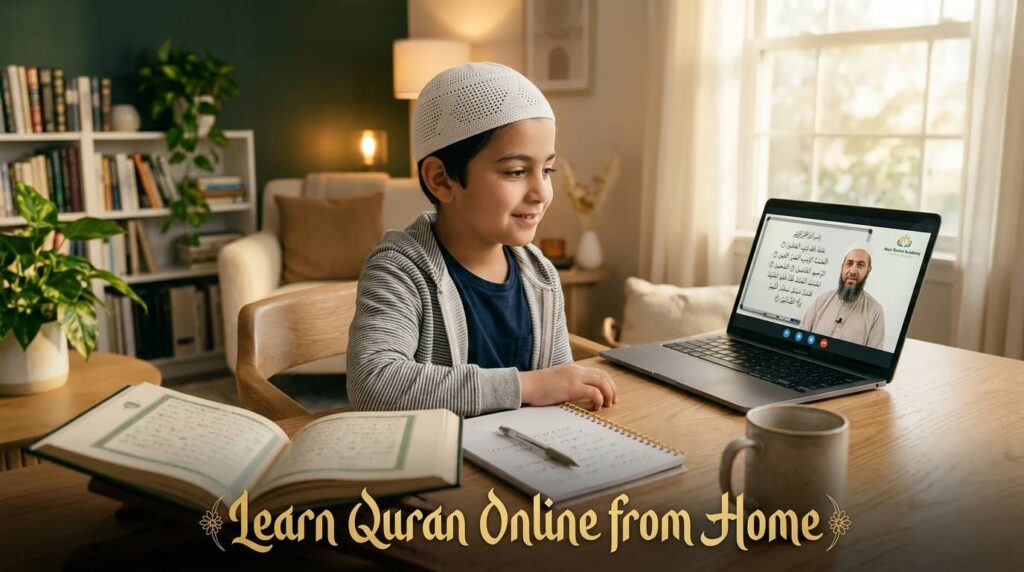
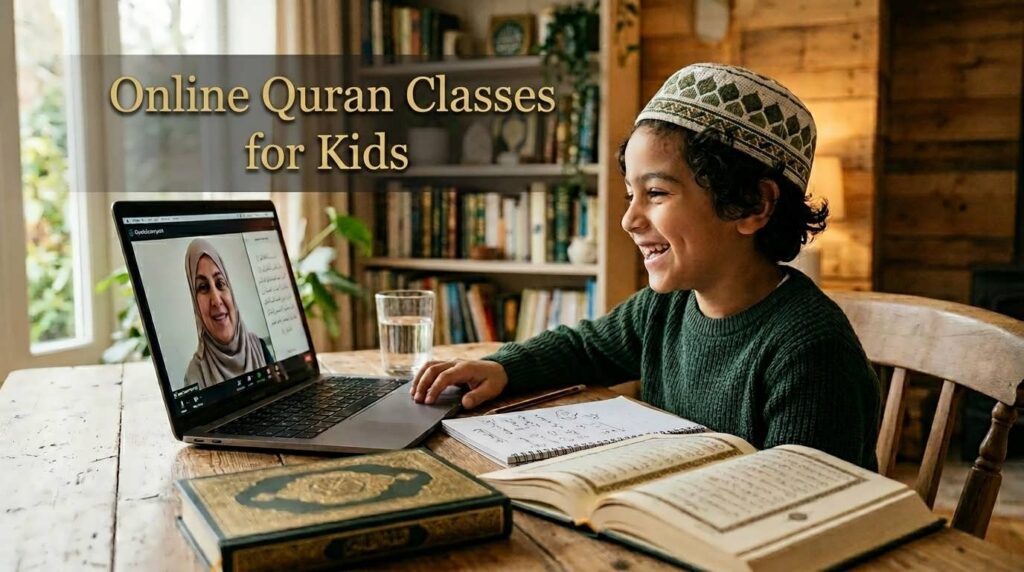
This is exactly why so many parents are turning to online Quran classes for kids. No driving across town. No waiting around in a mosque hallway while your child finishes a lesson. Just a laptop, a quiet corner of the house, and a teacher who shows up right on your screen at the time that works for your family.
In this guide, we will go through everything a parent needs to know before signing their child up for online Quran classes. We will talk about how the lessons actually work, what age is right to start, what to look for in a teacher, and how to keep your child motivated along the way. This is written for families in the USA, UK, Canada, Australia, Germany, and New Zealand, but really, it applies anywhere.
- 1. Why So Many Parents Are Choosing Online Quran Classes
- 2. How Do Online Quran Classes for Kids Actually Work
- 3. What Age Should My Child Start
- 4. What Will My Child Actually Learn
- 5. One on One Classes vs Group Classes
- 6. What to Look for in a Good Online Quran Teacher
- 7. Will My Child Stay Focused on a Screen
- 8. Setting Up the Right Environment at Home
- 9. How Parents Can Stay Involved Without Taking Over
- 10. Common Worries Parents Have (And the Honest Answers)
- 11. How Much Does It Cost
- 12. Frequently Asked Questions
- 13. Book a Free Trial Class with QuranJourney
1. Why So Many Parents Are Choosing Online Quran Classes
A few years ago, online learning for something as personal as Quran education felt unusual to a lot of families. Today it is just normal. Parents have seen how well their kids adapt to video calls, whether it is for school, talking to grandparents abroad, or even tutoring in maths and English. Quran lessons fit right into that same comfortable routine.
There are a few reasons this shift has happened so quickly.
First, time. Families are busy. Between two working parents, after school clubs, and weekend commitments, adding a long drive to and from a Quran class on top of everything else is simply not realistic for many households.
Second, access to good teachers. Not every town has a mosque with a dedicated children’s Quran program, and even where one exists, the class sizes can be large with limited one to one attention. Online classes open the door to teachers from all over the world, many of whom have years of experience specifically teaching children.
Third, comfort. Kids often feel more relaxed learning from their own home. There is less social pressure than being in a room full of other children, and shy kids in particular tend to open up more when it is just them and the teacher.
And finally, consistency. When a class is online, there is no excuse of bad weather, no missed lessons because of traffic, no rushing out the door. The lesson starts on time, every time, because everyone is already at home.
2. How Do Online Quran Classes for Kids Actually Work
If your family has never tried this before, the whole idea might feel a bit abstract. So let’s walk through exactly what a typical class looks like.
Most online Quran academies use video call platforms like Zoom or Skype, the same apps many families already use for video calls with relatives. Your child logs in at the scheduled time, and the teacher joins from wherever they are based, often somewhere with strong Quran teaching traditions.
A typical lesson lasts between 30 minutes and an hour, depending on your child’s age and the type of class. Younger children usually do shorter sessions since their attention spans are smaller, while older kids can manage longer ones.
During the lesson, the teacher will usually start by reviewing what was covered last time, sometimes asking your child to recite a short passage they practiced. Then new material is introduced, whether that is a new letter, a new rule of pronunciation, or a new portion to memorize. The teacher listens closely and gently corrects mistakes as they happen, which is something that is honestly hard to replicate in a large group class.
At the end of the lesson, the teacher usually gives a small homework task, something simple your child can practice before the next session. Many academies also send progress updates to parents so you always know what is being covered and how your child is doing.
The beauty of this setup is that it feels personal. Your child is not one of fifteen kids competing for the teacher’s attention. It is just them, the teacher, and the lesson, week after week.
3. What Age Should My Child Start
This is one of the questions parents ask most often, and the honest answer is that there is no fixed age that works for every child.
That said, many academies start taking students from around age 4 or 5, with lessons designed specifically for that age group. At this stage, the focus is usually on letter recognition, simple sounds, and short verses, often taught through repetition and a bit of play.
By age 6 or 7, most children can sit through a structured 30 minute lesson without too much trouble, and this is often when families start a more formal program, whether that is learning to read the Quran properly or beginning memorization.
If your child is older, say 9, 10, or even a teenager, and has not started yet, that is completely fine too. Older kids often pick things up faster because they can read better in general and understand instructions more easily. The main thing that matters is whether your child is ready to sit, listen, and follow along for a short period, not their exact age in years.
If you are unsure, most academies offer a free trial lesson, which is a great way to see how your child responds before committing to anything.
4. What Will My Child Actually Learn
Online Quran classes for kids usually cover a few different areas, and which ones your child focuses on depends on their age and current level.
For complete beginners, the starting point is usually something called Noorani Qaida. This is the foundation course that teaches the Arabic alphabet, how letters sound on their own and when joined together, and the basic vowel marks. Think of it as the equivalent of learning your ABCs before you can read full sentences. Most kids who have never seen Arabic before will start here.
Once a child can read Arabic reasonably well, the focus shifts to Quran reading with correct pronunciation, often called Tajweed. This is where children learn the proper way to pronounce each letter and sound, including some rules that do not exist in English, like certain nasal sounds or how long to hold a vowel.
Many families also want their children to memorize portions of the Quran, which is called Hifz. This can range from memorizing a handful of short chapters that are used in daily prayer, all the way up to memorizing the entire Quran over several years. Online Hifz programs build this in gradually, with daily new material and regular review of what was learned before.
On top of the Quran itself, many academies also offer basic Islamic studies for kids, covering things like the stories of the prophets, daily prayers and their meanings, good manners in Islam, and simple explanations of faith basics in a way that makes sense to children.
5. One on One Classes vs Group Classes
When looking at online Quran classes, you will come across both one on one lessons and group classes, and it is worth understanding the difference before choosing.
In a one on one class, your child gets the full, undivided attention of the teacher for the entire lesson. The pace is set entirely around your child. If they are struggling with a particular sound, the teacher can spend extra time on it. If they are progressing quickly, the teacher can move faster. There is also nowhere to hide, which sounds intimidating but actually means your child gets corrected gently and immediately rather than slipping through unnoticed.
Group classes, on the other hand, usually involve several children learning together, sometimes with similar ages or levels. These can work well for kids who are more social and enjoy learning alongside others, and they are often priced lower since the teacher’s time is shared.
For younger children, or for kids just starting out, most teachers and parents find that one on one classes lead to faster, more confident progress. As children get older and more confident, some families choose to mix things up, perhaps a few one on one sessions for memorization alongside a group class for general Islamic studies.
There is no right or wrong answer here. It really comes down to your child’s personality and what your family’s budget and schedule allow.
6. What to Look for in a Good Online Quran Teacher
Since the teacher is really at the heart of the whole experience, it is worth spending a bit of time thinking about what makes a good one, especially for kids.
A good children’s Quran teacher is patient. Kids make the same mistake five times before it clicks, and a teacher who gets frustrated by that is not the right fit. Look for academies that specifically train their teachers to work with children, not just adults.
Qualifications matter too. Look for teachers who have proper certification in Tajweed and Quran recitation, ideally with what is called an Ijazah, which is a formal certification showing they learned correctly from a qualified source themselves.
For families with daughters, it is worth checking whether female teachers are available. Many parents prefer this, especially as girls get a bit older, and a good academy will have this option ready without you needing to ask twice.
Communication style is another big one. Even if a teacher is highly qualified, if they cannot explain things in a way your child understands, especially if English is your child’s main language, progress will be slow. Ask whether teachers are comfortable teaching in English, or whatever language your family is most comfortable with.
Finally, look at how the academy handles feedback. Do they give you regular updates on what your child is learning and how they are doing? Or do you just get a monthly bill with no idea what is actually happening in lessons? The good academies keep parents in the loop.
7. Will My Child Stay Focused on a Screen
This is a fair worry, especially if your child already spends time on tablets and screens for entertainment, and the idea of adding another screen activity might feel counterproductive.
The good news is that a live Quran lesson is quite different from passive screen time like watching videos or playing games. Your child is actively engaged the whole time, reciting, listening, answering questions, and being gently guided by a real person watching them in real time. It is much closer to a piano lesson or a tutoring session than it is to scrolling through a video app.
That said, a few things help keep kids focused during online lessons. Shorter sessions for younger children make a big difference, 20 to 30 minutes is often plenty for kids under 7. Having the lesson at a consistent time each day, ideally when your child is not already tired, also helps a lot. Many parents find mornings or right after school, before screen time for entertainment starts, work best.
It also helps if the device used for Quran lessons is kept separate from entertainment, even if it is the same physical device. Some families use a different account or simply make sure the only thing open during lesson time is the video call and the lesson materials, nothing else.
8. Setting Up the Right Environment at Home
You do not need anything fancy to get started, but a little bit of setup goes a long way in helping your child get the most out of their lessons.
A quiet spot away from the television, other siblings playing, or general household noise makes a huge difference. It does not need to be a separate room, even a corner of the dining table works fine, as long as it is reasonably calm during lesson time.
Good lighting helps too, especially if the lesson involves the teacher needing to see your child’s mouth for pronunciation practice. Natural light from a window facing your child usually works well.
Headphones with a built in microphone are worth getting if you do not already have a pair. They make a big difference in how clearly the teacher can hear your child, and they cut down on background noise being picked up by the microphone.
Keep the Quran or learning materials your academy provides nearby and organized, so your child is not scrambling to find the right book or page right as the lesson starts. A simple folder or shelf dedicated to Quran lesson materials works well.
And finally, try to remove obvious distractions before the lesson begins. Phones on silent, siblings aware that lesson time is happening, pets settled if possible. None of this needs to be perfect, but a calm five minutes before the lesson starts sets the tone for the whole session.
9. How Parents Can Stay Involved Without Taking Over
One of the nice things about online Quran classes is that parents can be as involved as they want to be, especially compared to dropping a child off somewhere and picking them up an hour later with little idea of what happened in between.
For younger children, sitting nearby during the lesson, especially the first few sessions, helps both you and your child get comfortable with the format. You will get a feel for the teacher’s style and your child will feel more secure having you close by.
As children get a bit older and more confident, many parents step back from sitting in on every lesson, but stay involved in other ways. A simple one that works well is asking your child to show you what they learned after each lesson. Even five minutes of “show me what you practiced today” makes your child feel proud of their progress and gives you a window into how things are going.
If the academy provides progress reports, take a few minutes to actually read them. They often highlight specific things your child is working on, which gives you something concrete to encourage at home, like reminding them to practice a particular Surah before bed.
The goal is not to become a Quran teacher yourself, but simply to show your child that this matters to you too. That kind of quiet support often makes a bigger difference to a child’s motivation than anything else.
10. Common Worries Parents Have (And the Honest Answers)
Let’s be honest about some of the things that go through a parent’s mind before signing up for online Quran classes.
“What if the teacher is not a good fit for my child?” This is a real possibility, and it happens sometimes even with great teachers, simply because personalities do not always click. The good news is that most academies are happy to switch teachers if things are not working out after giving it a fair shot, usually a few weeks. Do not feel like you are stuck once you start.
“What if my child loses interest after a few weeks?” This is incredibly common and honestly expected. Most kids go through phases where motivation dips. What usually helps is talking to the teacher about it rather than just quitting, since a small change, like adjusting the pace or mixing in something more engaging, often fixes it. A short break followed by easing back in also works for a lot of families.
“Is it safe for my child to be on video calls with someone I have not met in person?” This is a completely valid concern, and it is worth asking any academy directly about their safety policies. Reputable academies background check their teachers, often record lessons for safeguarding purposes, and have clear policies about what is and is not appropriate during a class. Do not be shy about asking these questions before signing up, any academy worth your time will have clear answers ready.
“What if we need to skip a class because of family stuff?” Life happens. Most academies allow you to reschedule with a bit of notice, so an occasional missed week because of illness, travel, or just a chaotic day does not derail the whole program.
11. How Much Does It Cost
Pricing for online Quran classes for kids varies, but generally speaking it tends to be more affordable than people expect, especially compared to many other types of tutoring.
Costs typically depend on a few things: whether the class is one on one or group, how many sessions per week, and the length of each session. One on one classes naturally cost more per session than group classes, but many families feel the extra individual attention is worth it, especially for younger children or those just starting out.
Most academies offer monthly packages rather than charging per lesson, which makes budgeting easier. Many also offer discounts for siblings learning together, since families often want more than one child enrolled.
A free trial lesson is almost always a good idea before committing to a paid plan, not just to see if your child likes it, but also to get a feel for the platform, the teacher, and how everything works before any money changes hands.
12. Frequently Asked Questions
What equipment do we need to get started? Not much at all. A laptop, tablet, or even a smartphone with a camera works fine. A stable internet connection is important, and a pair of headphones with a microphone makes a noticeable difference in lesson quality, though it is not strictly required to get started.
How many days a week should my child do Quran classes? This depends on your child’s age and goals. For younger children just starting out, two to three sessions a week is often enough. For children working on memorization or trying to progress faster, daily sessions, even if shorter, tend to work better than fewer longer ones.
My child does not speak Arabic at all. Is that a problem? Not at all. Most online Quran academies that work with Western families have teachers who are comfortable explaining everything in English, especially during the early stages. Your child does not need to know Arabic beforehand, that is exactly what the lessons are for.
Can siblings share a class together? It depends on their ages and levels. If siblings are close in age and similar levels, some families do enroll them in the same group class. However, for proper progress, especially in reading and memorization, separate one on one sessions usually work better since each child needs to be corrected individually.
What happens if my child falls behind compared to other kids their age? There really is no “behind” when it comes to Quran learning. Every child progresses at their own pace, and a good teacher adjusts the lesson plan to match your child rather than pushing them to keep up with some imaginary schedule. Comparing your child to others is rarely helpful, what matters is steady, consistent progress for them specifically.
Are online classes as effective as in person classes? For most children, yes. The personal attention in a one on one online class is often better than what is possible in a crowded in person setting. The main thing that matters is consistency and a good teacher, not whether the class happens in person or on a screen.
13. Book a Free Trial Class with QuranJourney
At QuranJourney, we have built our entire program around making Quran education simple and stress free for busy families in the USA, UK, Canada, Australia, Germany, and New Zealand. Our teachers are specifically experienced in working with children, patient, qualified, and genuinely enjoy teaching kids.
Here is what you can expect when you join us:
One on one lessons tailored to your child’s age and level. Teachers experienced in working with children, including options for younger kids and complete beginners. Both male and female teachers available. Flexible scheduling that fits around school, activities, and family life across all time zones. Regular updates so you always know what your child is learning. A calm, encouraging approach that helps kids actually enjoy their Quran lessons rather than dread them.
Your child’s first lesson is completely free, with no obligation and no payment details needed. It is simply a chance to see how everything works and how your child responds.
Book your free trial class at QuranJourney.net
QuranJourney: Making Quran Learning Simple, Personal, and Enjoyable for Every Child.