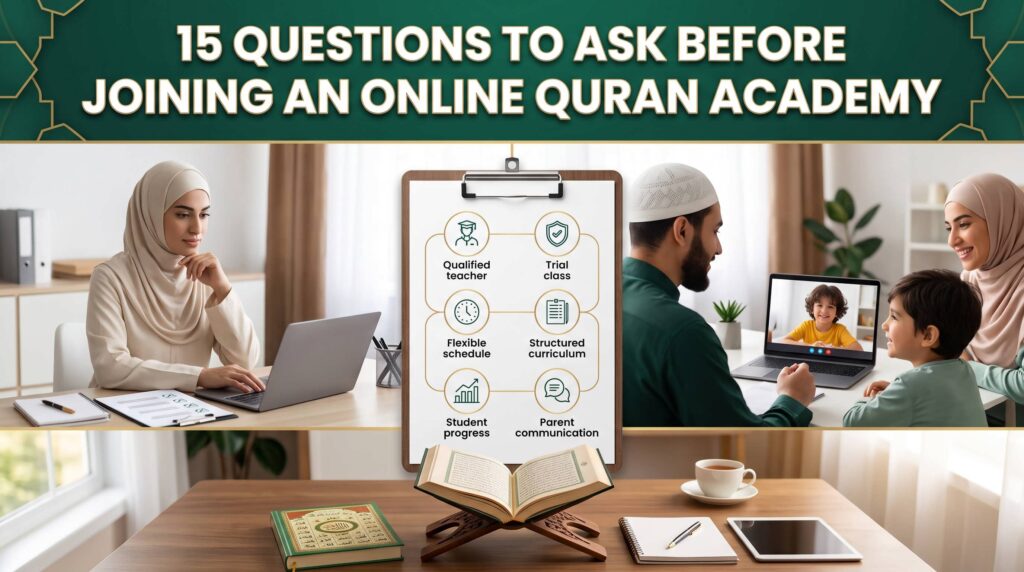
Before joining an online Quran academy, ask about teacher qualifications, curriculum, class format, pricing, trial classes, scheduling, student progress, safety measures, and communication with parents. These questions help you compare academies objectively and choose one that provides quality Islamic education in a professional and supportive environment.
Choosing an online Quran academy is an important decision, especially when you’re investing in your own Islamic education or your child’s future. While many academies offer similar services, their teaching quality, curriculum, communication, and student support can vary significantly.
Asking the right questions before enrolling helps you look beyond marketing claims and evaluate what truly matters. This guide covers the most important questions every parent and student should ask before choosing an online Quran academy, so you can make an informed decision with confidence.
Why Asking Questions Before Enrolling Matters
A professional academy should welcome your questions.
In fact, the way an academy responds before enrollment often reflects how it will communicate after you become a student.
The answers you receive can help you understand:
- Teaching quality
- Learning structure
- Student support
- Professionalism
- Transparency
- Overall value
Rather than choosing the first academy you find online, compare a few options using the same questions.
Questions About Teachers
1. What Qualifications Do Your Quran Teachers Have?
The teacher is the most important part of any Quran learning experience.
Ask whether teachers have:
- Formal Islamic education
- Strong Tajweed knowledge
- Experience teaching children and adults
- Good communication skills
- Experience with online teaching
A qualified teacher should know not only what to teach, but how to teach students at different ages and ability levels.
If you’re unsure what to look for, our guide How to Choose a Female Quran Teacher explains the qualities that distinguish an effective Quran instructor beyond academic credentials.
2. Can I Choose a Male or Female Teacher?
Many families have preferences based on the student’s age, comfort level, or cultural considerations.
Ask whether the academy offers:
- Female teachers for girls and women
- Male teachers when preferred
- The option to change teachers if needed
A flexible academy understands that the right teacher-student match contributes to a better learning experience.
3. How Much Teaching Experience Do Your Instructors Have?
Experience matters because experienced teachers know how to:
- Explain difficult concepts.
- Adapt lessons to different learning styles.
- Keep students motivated.
- Correct pronunciation patiently.
- Build confidence over time.
Don’t hesitate to ask how long teachers have been teaching online Quran classes.
Questions About the Learning Program
4. Is There a Structured Curriculum?
Avoid academies that simply move from lesson to lesson without a clear learning plan.
A structured curriculum should explain:
- Where beginners start
- Learning milestones
- Assessment methods
- Expected progression
For example, beginners often move through:
- Noorani Qaida
- Arabic letter recognition
- Quran reading
- Tajweed
- Quran memorization or advanced studies
Structured learning helps students stay motivated because they can see measurable progress.
5. Are Classes One-on-One or Group Based?
Each learning format has advantages.
One-on-one classes usually provide:
- Personalized instruction
- Immediate pronunciation correction
- Flexible pacing
- Individual feedback
Group classes may encourage interaction and shared learning, but they often move at a pace that suits the class rather than each individual student.
Ask which format best matches your goals.
6. How Is Student Progress Measured?
Learning should never feel random.
Ask whether the academy provides:
- Regular assessments
- Homework
- Tajweed evaluations
- Progress reports
- Parent updates
A professional academy should be able to explain how it measures improvement throughout the course.
Questions About Scheduling
7. Can Class Times Be Changed If Needed?
Life is busy, especially for families balancing school, work, and other responsibilities.
Ask:
- Can lessons be rescheduled?
- How much notice is required?
- Are makeup classes available?
- What happens if the teacher cancels?
Flexible scheduling is one of the biggest advantages of online Quran learning, so it’s worth understanding the academy’s policy before enrolling.
8. What Happens If I Miss a Class?
Missing an occasional lesson is sometimes unavoidable.
A transparent academy should clearly explain:
- Whether missed classes can be rescheduled.
- Any notice requirements.
- Cancellation policies.
- Makeup lesson availability.
Knowing this in advance prevents misunderstandings later.
Questions About Safety and Trust
9. What Measures Do You Take to Protect Students?
This question is particularly important for parents.
A reputable academy should explain:
- Which learning platform it uses.
- How lessons are scheduled.
- Communication policies.
- Parent involvement.
- Student privacy practices.
If the academy struggles to answer these questions clearly, continue your search.
Our article Are Online Quran Classes Safe for Children? explores these safety considerations in much greater detail and explains how parents can confidently evaluate an academy before enrollment.
10. Can I Attend a Trial Class Before Registering?
One of the easiest ways to evaluate an academy is to experience a lesson yourself.
A trial class allows you to observe:
- Teaching style
- Teacher communication
- Lesson organization
- Student engagement
- Technical quality
Many trustworthy academies encourage trial lessons because they are confident in the quality of their teaching.
Questions About Pricing
11. What’s Included in the Monthly Fee?
The advertised tuition doesn’t always tell the whole story.
Ask whether the fee includes:
- Live classes
- Learning materials
- Progress assessments
- Certificates
- Makeup classes
- Technical support
Transparent pricing makes it easier to compare academies fairly.
If you’re comparing tuition between providers, our guide How Much Do Online Quran Classes Cost? explains typical pricing ranges, the factors that influence cost, and how to evaluate value instead of focusing only on the monthly fee.
According to UNESCO’s Digital Education initiatives, high-quality online learning depends on effective teaching, learner support, and thoughtful course design rather than technology or pricing alone. You can explore more through UNESCO Digital Education.
12. How Will Parents Receive Progress Updates?
For parents, regular communication is just as important as the lessons themselves.
Ask whether the academy provides:
- Progress reports
- Teacher feedback
- Homework updates
- Direct communication channels
- Recommendations for home practice
When parents understand their child’s strengths and areas for improvement, they can provide better support between lessons.
13. What Technology or Equipment Is Required?
Most online Quran classes don’t require expensive equipment, but it’s still helpful to know what’s expected before your first lesson.
Ask:
- Which device is recommended?
- Which video platform is used?
- Is a webcam required?
- What internet speed is recommended?
- Are learning materials provided digitally?
Preparing in advance helps lessons begin smoothly.
If you’re unsure about the technical setup, our guide What Equipment Do You Need for Online Quran Classes? explains everything you need before your first class.
Questions About Long-Term Learning
14. What Courses Can I Continue With After Completing My First Program?
Learning the Quran is a journey, not a single course.
Ask whether the academy offers a clear learning pathway after your initial program.
For example, students may continue with:
- Tajweed
- Quran memorization (Hifz)
- Tafsir
- Islamic Studies
- Arabic reading
A comprehensive academy supports students at every stage instead of focusing on short-term enrollment.
15. Why Should I Choose Your Academy Over Others?
This simple question often reveals the most about an academy.
Listen for specific, measurable answers rather than broad marketing claims.
Strong answers usually focus on:
- Qualified teachers
- Structured curriculum
- Student progress
- Flexible scheduling
- Professional communication
- Personalized learning
- Transparent policies
If the response is vague or relies only on promotional language, continue comparing other academies.
A Quick Checklist Before You Enroll
Before making your final decision, make sure you can confidently answer yes to these questions:
- Are the teachers qualified and experienced?
- Is there a structured curriculum?
- Does the academy offer a trial class?
- Are pricing and policies transparent?
- Can schedules be adjusted if needed?
- Are safety and privacy clearly explained?
- Will progress be monitored regularly?
- Is communication with parents encouraged?
If most of these answers are yes, you’re likely considering a professional and trustworthy academy.
How QuranJourney Answers These Questions
At QuranJourney, we believe parents and students should have complete confidence before enrolling.
That’s why we aim to provide clear answers from the very beginning.
Our approach includes:
- Qualified and experienced Quran teachers.
- Structured courses for beginners and advanced learners.
- Live one-on-one online classes.
- Flexible schedules for students across different time zones.
- Transparent country-specific pricing.
- Regular progress tracking.
- Friendly communication with parents and adult learners.
- A free trial class with no long-term commitment required.
Whether your goal is learning to read the Quran, improving Tajweed, or beginning a structured Islamic education, we encourage families to experience our teaching approach before making a decision.
You can book a Free Trial Class to meet a teacher, explore the learning environment, and ask any additional questions that matter to your family.
Conclusion
Choosing an academy is about much more than comparing prices or reading advertisements.
By asking the right questions before joining an online Quran academy, you gain a clearer understanding of teaching quality, curriculum, communication, student support, and long-term learning opportunities.
A reputable academy will welcome your questions, answer them honestly, and help you make an informed decision without pressure. Taking a little extra time to compare your options today can lead to a more rewarding Quran learning experience for years to come.
Frequently Asked Questions
Why should I ask questions before joining an online Quran academy?
Asking questions helps you evaluate the academy’s teachers, curriculum, pricing, communication, and learning approach. It also allows you to compare different academies objectively before making a commitment.
Is a free trial class important?
Yes. A trial class lets you experience the teaching style, meet the instructor, test the technology, and determine whether the learning environment meets your expectations before enrolling.
How do I know if an online Quran academy is trustworthy?
Look for qualified teachers, transparent pricing, structured courses, positive communication, clear policies, and a willingness to answer your questions. Trustworthy academies are open about how they teach and support students.
Should I ask about teacher qualifications?
Absolutely. Qualified teachers with experience in Tajweed, Quran recitation, and online instruction can significantly improve the learning experience for both children and adults.
What should parents ask about child safety?
Parents should ask about teacher supervision, lesson platforms, communication policies, privacy practices, and whether they can observe trial lessons or receive regular progress updates.
Are one-on-one classes better than group classes?
It depends on your goals. One-on-one classes offer personalized attention and flexible pacing, while group classes may suit students who enjoy learning alongside others.
Should I compare pricing between academies?
Yes, but compare the overall value rather than the monthly fee alone. Consider teacher quality, lesson length, curriculum, student support, and included services.
What is the biggest mistake people make when choosing an online Quran academy?
Many people enroll based solely on price or advertising. A better approach is to evaluate teaching quality, transparency, student support, and the academy’s long-term learning pathway.