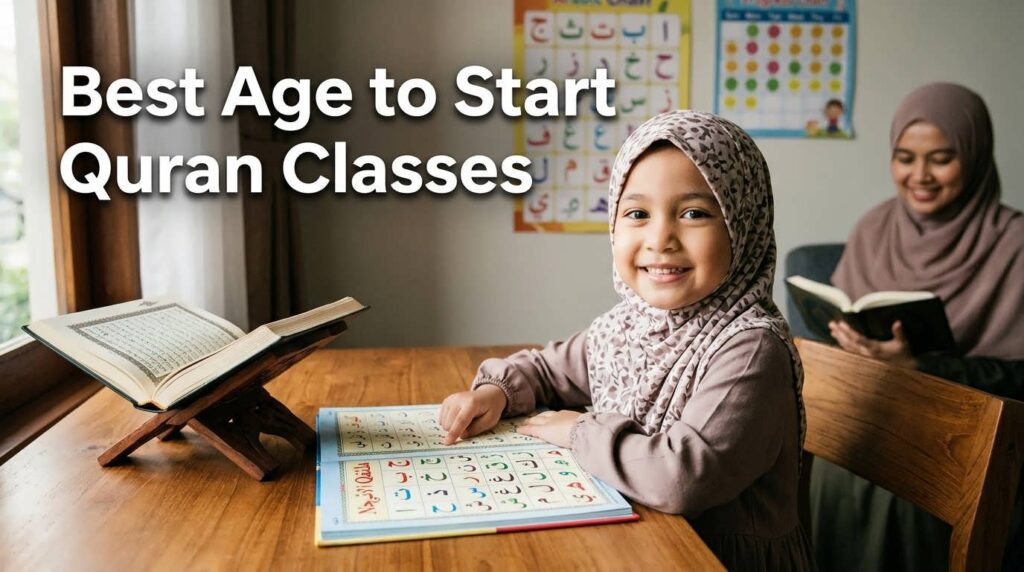
The best age to start Quran classes is typically between 4 and 7 years old, when most children are developing language, listening, and learning skills. However, readiness matters more than age alone. A child who can focus, follow simple instructions, and show interest in learning may be ready to begin Quran education earlier or later depending on individual development.
Many Muslim parents ask the same question: When should my child start learning the Quran?
While there is no single age that works for every child, introducing Quran learning early can help children develop familiarity with Arabic, build positive learning habits, and establish a strong connection with Islamic education.
The key is finding the right balance between starting early and ensuring the child is developmentally ready. A well-timed introduction to Quran learning can make the experience enjoyable and productive rather than overwhelming.
- Is There a Specific Age Recommended for Quran Classes?
- Why Ages 4 to 7 Are Often Considered Ideal
- Readiness Matters More Than Age
- Can Children Start Quran Learning Before Age 4?
- Benefits of Starting Quran Learning Early
- What If My Child Starts Later?
- How to Introduce Quran Classes Successfully
- Choosing the Right Quran Teacher for Young Children
- Online Quran Classes for Young Children
- Age-Based Quran Learning Guide
- Beyond Reading: Helping Children Understand the Quran
- Common Mistakes Parents Should Avoid
- How to Know If Your Child Is Ready Right Now
- Conclusion
- Frequently Asked Questions
Is There a Specific Age Recommended for Quran Classes?
There is no universally required age for beginning Quran classes.
However, many Islamic educators and Quran academies find that children often begin structured Quran learning between the ages of 4 and 7 years.
During this stage, most children are developing:
- Listening skills
- Language comprehension
- Memory retention
- Learning routines
- Attention span
These abilities help create a strong foundation for Quran education.
Why Ages 4 to 7 Are Often Considered Ideal
Children in this age range are naturally curious and receptive to learning.
They can usually:
- Recognize patterns
- Memorize short phrases
- Follow simple instructions
- Participate in structured lessons
- Develop daily learning habits
This makes it easier to introduce concepts such as:
- Arabic letters
- Noorani Qaida
- Short Surahs
- Basic duas
- Quran recitation
Many students begin with a structured Nazara Quran Course that gradually develops reading confidence and Quran fluency.
Readiness Matters More Than Age
Age alone should not determine whether a child starts Quran classes.
Some children are ready at four years old, while others may benefit from waiting until six or seven.
Parents should look for signs of readiness such as:
Ability to Sit for Short Periods
A child should be able to focus on an activity for 10 to 20 minutes.
Ability to Follow Instructions
Basic classroom participation requires listening and responding to guidance.
Interest in Learning
Children who show curiosity about books, stories, or Islamic activities often adapt more easily.
Basic Communication Skills
Being able to understand simple explanations helps children participate effectively.
When these signs are present, Quran classes often become more productive and enjoyable.
Can Children Start Quran Learning Before Age 4?
Yes, but expectations should be different.
At this stage, Quran exposure is often more important than formal instruction.
Parents can introduce:
- Quran recitation audio
- Short duas
- Islamic stories
- Arabic letter recognition
- Family Quran time
The goal is to create familiarity and positive associations rather than academic achievement.
Many early childhood education experts emphasize that young children learn best through repetition, observation, and engagement rather than formal study.
Benefits of Starting Quran Learning Early
Starting Quran education during childhood offers several advantages.
Easier Memorization
Young children often have a remarkable ability to memorize new information.
This can make learning:
- Short Surahs
- Daily duas
- Quranic verses
more natural and enjoyable.
Students interested in memorization may later progress to a structured Hifz Ul Quran Course.
Development of Positive Habits
Children who begin Quran learning early often develop:
- Consistency
- Discipline
- Time management
- Respect for learning
These habits can benefit them throughout life.
Stronger Connection With Islamic Education
Early exposure helps children view Quran learning as a normal and meaningful part of daily life.
This connection can strengthen their Islamic identity as they grow older.
What If My Child Starts Later?
Some parents worry that their child is “behind” if they start Quran classes at age 8, 10, or even later.
In reality, many children begin Quran learning successfully at older ages.
Older students often have advantages such as:
- Better concentration
- Stronger reading skills
- Greater self-discipline
- Improved understanding
The most important factor is not when a child starts, but whether they learn consistently.
How to Introduce Quran Classes Successfully
The first experience often shapes a child’s attitude toward Quran learning.
Parents can improve the experience by:
Keeping Expectations Realistic
Progress takes time.
Avoid comparing your child with others.
Celebrating Small Achievements
Recognize milestones such as:
- Learning Arabic letters
- Completing Noorani Qaida lessons
- Memorizing short Surahs
Maintaining Consistency
Short, regular lessons are usually more effective than occasional long sessions.
Creating a Positive Environment
Encouragement often produces better results than pressure.
Choosing the Right Quran Teacher for Young Children
A child’s first teacher can significantly influence their learning experience.
Parents should look for:
- Patience
- Experience teaching children
- Strong Tajweed knowledge
- Clear communication skills
- Child-friendly teaching methods
Many families prefer a Female Quran Teacher for Kids because of the supportive and nurturing learning environment they often provide.
If you’re evaluating instructors, our guide on How to Choose a Female Quran Teacher offers practical advice for selecting the right teacher.
Online Quran Classes for Young Children
Online Quran learning has become increasingly popular among Muslim families worldwide.
Benefits include:
- Learning from home
- Flexible scheduling
- One-on-one instruction
- Access to qualified teachers
- Greater parental involvement
Families in the USA, UK, Canada, Germany, New Zealand, and across Europe often choose online Quran classes because they provide access to experienced teachers regardless of location.
If you’re new to online learning, our guide on How Online Quran Classes Work explains the process in detail.
Age-Based Quran Learning Guide
| Age Range | Recommended Focus |
|---|---|
| 2-4 Years | Quran listening, duas, Islamic stories, Arabic letter exposure |
| 4-6 Years | Noorani Qaida, Arabic letters, short Surahs |
| 6-8 Years | Quran reading, Tajweed basics, memorization |
| 8-12 Years | Advanced reading, Tajweed, understanding meanings |
| 12+ Years | Quran recitation, Tafsir, Hifz, Islamic studies |
Remember that every child develops differently. These are general guidelines rather than strict rules.
Beyond Reading: Helping Children Understand the Quran
As children mature, parents should gradually introduce Quran understanding alongside recitation.
This may include:
- Learning simple meanings
- Discussing Quranic lessons
- Connecting verses to daily life
- Reflecting on Islamic values
Families seeking deeper Quranic understanding may explore a structured Dars-e-Quran Course.
Students can also benefit from authentic Islamic teachings available through Sunnah.com and Quran study resources at Quran.com.
Common Mistakes Parents Should Avoid
Starting Too Intensely
Young children benefit from gradual introduction.
Comparing Children
Every child learns at a different pace.
Focusing Only on Memorization
Understanding and love for the Quran are equally important.
Inconsistent Schedules
Regular practice generally produces better results than occasional intensive sessions.
Using Excessive Pressure
Positive encouragement often leads to stronger long-term engagement.
How to Know If Your Child Is Ready Right Now
Ask yourself:
- Can my child focus for 10 to 20 minutes?
- Can they follow simple instructions?
- Do they show interest in learning?
- Are they comfortable participating in structured activities?
If the answer is yes to most of these questions, your child may be ready to begin Quran classes.
A free Trial Class can also help parents evaluate readiness while allowing the child to experience a real lesson.
You can learn more about the academy’s educational approach through the About Us page or discuss your child’s learning needs through the Contact Us page.
Conclusion
Determining the best age to start Quran classes depends more on a child’s readiness than a specific number. While many children begin between the ages of 4 and 7, successful Quran learning can start earlier through gentle exposure or later through structured instruction.
The goal is not simply to begin as early as possible. The goal is to create a positive learning experience that helps children develop confidence, consistency, and a lifelong connection with the Quran.
Frequently Asked Questions
What is the best age to start Quran classes?
Most children begin Quran classes between the ages of 4 and 7, although readiness and individual development are more important than age alone.
Can a 3-year-old start learning the Quran?
Yes. At this age, learning is usually informal and may include listening to Quran recitation, learning short duas, and recognizing Arabic letters.
Is it too late to start Quran classes at age 10?
No. Many children successfully begin Quran education at age 10 or older and often progress quickly due to improved concentration and maturity.
Should children learn Noorani Qaida first?
Yes. Noorani Qaida provides the foundation for Arabic reading and helps children develop proper pronunciation before reading the Quran.
How long should Quran lessons be for young children?
Most young children benefit from lessons lasting 15 to 30 minutes, depending on age and attention span.
Are online Quran classes suitable for beginners?
Yes. Many beginners thrive in online Quran classes because they receive personalized instruction and flexible scheduling.
How can parents encourage children to enjoy Quran learning?
Parents can maintain positive routines, celebrate achievements, avoid excessive pressure, and choose engaging teachers.
Is memorization necessary when starting Quran classes?
Not immediately. Most children begin with Arabic letters, Noorani Qaida, and Quran reading before progressing to structured memorization.