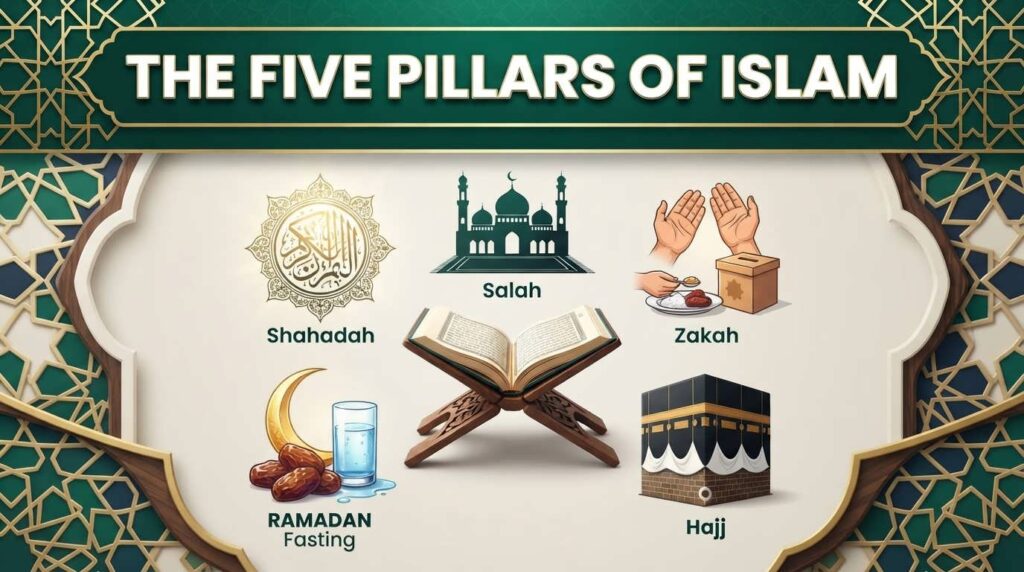
The Five Pillars of Islam are the five core acts of worship that form the foundation of a Muslim’s faith and practice. They are Shahadah (faith), Salah (prayer), Zakah (charity), Sawm (fasting during Ramadan), and Hajj (pilgrimage to Makkah). These pillars help Muslims strengthen their relationship with Allah and guide their daily lives.
Islam provides a complete way of life built on faith, worship, compassion, and personal responsibility.
At the heart of this way of life are the Five Pillars of Islam, which serve as the foundation of a Muslim’s beliefs and daily practice.
Whether someone is born into a Muslim family, has recently embraced Islam, or simply wants to understand the basics of the faith, learning about these pillars is an essential first step.
Each pillar teaches an important lesson about worshipping Allah, caring for others, and developing good character.
Together, they shape a Muslim’s relationship with Allah and influence everyday decisions, actions, and priorities.
In this guide, we’ll explain each of the Five Pillars of Islam in simple terms, explore why they matter, and show how learning the Quran can help Muslims practice their faith with greater understanding and confidence.
- Why Are the Five Pillars of Islam Important?
- Pillar #1: Shahadah (Declaration of Faith)
- Pillar #2: Salah (Daily Prayer)
- Pillar #3: Zakah (Obligatory Charity)
- Pillar #4: Sawm (Fasting During Ramadan)
- Pillar #5: Hajj (Pilgrimage to Makkah)
- How the Five Pillars Work Together
- Teaching Children About the Five Pillars
- How Quran Learning Supports Every Pillar
- How QuranJourney Helps Muslims Learn the Quran
- Conclusion
- Frequently Asked Questions
Why Are the Five Pillars of Islam Important?
The Five Pillars are called the foundation of Islam because they establish the essential acts of worship that every Muslim strives to observe according to their ability and circumstances.
Rather than being isolated acts of worship, they work together to strengthen a believer’s faith, discipline, gratitude, compassion, and connection with Allah.
These pillars encourage Muslims to:
- Remember Allah throughout daily life.
- Develop regular worship habits.
- Care for those in need.
- Practice patience and self-control.
- Strengthen unity within the Muslim community.
They also remind Muslims that faith is demonstrated not only through belief but also through sincere actions.
The Prophet Muhammad (peace and blessings be upon him) emphasized the importance of these pillars in the well-known hadith:
“Islam is built upon five…”
This narration introduces the five foundational acts that every Muslim should understand and strive to practice.
Pillar #1: Shahadah (Declaration of Faith)
The first pillar of Islam is Shahadah, the declaration that affirms a person’s belief in Allah and His Messenger.
It states:
“There is no god worthy of worship except Allah, and Muhammad is the Messenger of Allah.”
This testimony is the foundation upon which all other acts of worship are built.
Accepting and sincerely believing this declaration makes a person a Muslim.
Shahadah teaches that:
- Allah alone deserves worship.
- Prophet Muhammad (peace and blessings be upon him) is Allah’s final Messenger.
- Every act of worship should be performed sincerely for Allah.
- Faith influences every aspect of life.
Because Shahadah forms the basis of Islamic belief, Muslims renew this testimony regularly during prayer and daily remembrance of Allah.
Pillar #2: Salah (Daily Prayer)
Salah is the second pillar of Islam and one of the most visible acts of worship in a Muslim’s daily life.
Muslims perform five obligatory prayers every day at prescribed times.
These prayers create regular opportunities to remember Allah, seek His guidance, and strengthen spiritual discipline.
Salah also teaches valuable qualities such as:
- Punctuality.
- Humility.
- Gratitude.
- Patience.
- Consistency.
Learning to recite the Quran correctly is an important part of performing Salah with confidence.
Every Muslim recites verses from the Quran during prayer, making Quran learning an important lifelong goal.
If you’re just beginning your Quran journey, our guide Daily Quran Learning Plan for Beginners offers practical advice for developing a consistent learning routine.
Pillar #3: Zakah (Obligatory Charity)
Zakah is the third pillar of Islam.
It is a compulsory form of charity that eligible Muslims give from their wealth to those who qualify to receive it.
The purpose of Zakah is not only to assist those in need but also to purify wealth and encourage generosity.
Zakah reminds Muslims that:
- Wealth is a trust from Allah.
- Helping others is an act of worship.
- Society becomes stronger when people care for one another.
- Gratitude should be expressed through generosity.
By supporting individuals and families facing hardship, Zakah promotes compassion and social responsibility within the Muslim community.
The Quran contains numerous verses encouraging charity, kindness, and caring for those in need, demonstrating that financial generosity is closely connected with spiritual growth.
Pillar #4: Sawm (Fasting During Ramadan)
Sawm refers to fasting during the month of Ramadan.
From dawn until sunset, Muslims who are required to fast refrain from eating, drinking, and other acts that invalidate the fast.
However, Ramadan is much more than avoiding food and drink.
It is a month dedicated to:
- Worship.
- Self-discipline.
- Gratitude.
- Patience.
- Increased Quran recitation.
- Charity and good deeds.
Many Muslims choose Ramadan as a time to strengthen their relationship with the Quran by reading, listening to, and reflecting upon its message more consistently.
Resources such as Quran.com help readers access the Quran with translations and audio recitations, making it easier to maintain regular Quran reading throughout Ramadan and beyond.
Pillar #5: Hajj (Pilgrimage to Makkah)
Hajj is the fifth pillar of Islam and is required once in a lifetime for every Muslim who is physically and financially able to perform it.
Each year, millions of Muslims travel to Makkah during the designated days of Dhul Hijjah to perform the rites of Hajj.
The pilgrimage commemorates the devotion, sacrifice, and obedience of Prophet Ibrahim (Abraham), his wife Hajar, and their son Ismail (peace be upon them).
Hajj teaches profound lessons, including:
- Complete submission to Allah.
- Patience during challenges.
- Equality among Muslims.
- Gratitude for Allah’s blessings.
- Unity of the global Muslim community.
Although not every Muslim is required to perform Hajj immediately, understanding its significance is an important part of learning about Islam.
How the Five Pillars Work Together
Each pillar has a unique purpose, but together they create a balanced foundation for a Muslim’s life.
- Shahadah strengthens belief.
- Salah nurtures a daily connection with Allah.
- Zakah develops compassion and generosity.
- Sawm builds patience and self-discipline.
- Hajj demonstrates unity, sacrifice, and devotion.
Rather than existing separately, these pillars support one another and encourage Muslims to grow spiritually while serving their communities with sincerity and good character.
Teaching Children About the Five Pillars
Children often understand Islamic concepts best through simple explanations, daily examples, and consistent encouragement.
Parents can introduce the Five Pillars by:
- Reading age-appropriate Islamic books together.
- Encouraging children to observe daily prayers.
- Involving them in acts of charity.
- Explaining the purpose of fasting during Ramadan.
- Sharing stories about Hajj and the Prophets.
- Making Quran learning a regular family activity.
These everyday experiences help children appreciate that Islam is not only about learning information but also about putting faith into practice.
How Quran Learning Supports Every Pillar
The Quran provides guidance for every aspect of a Muslim’s life, including the Five Pillars of Islam.
As Muslims learn to read and understand the Quran, they gain a deeper appreciation of the wisdom behind these acts of worship.
For example:
- During Salah, Muslims recite verses from the Quran in every prayer.
- The Quran frequently encourages Zakah, generosity, and helping those in need.
- During Ramadan, Muslims often increase their Quran recitation and reflection.
- Verses about Hajj explain its significance and remind believers of its spiritual purpose.
- The Quran repeatedly calls people to believe in Allah alone, reinforcing the message of Shahadah.
Learning the Quran therefore complements every pillar by helping Muslims worship with greater understanding and sincerity.
If you’re beginning your Quran learning journey, our articles Can Adults Learn Quran Online from Scratch? and Why Learn Tajweed can help you build confidence in reading the Quran correctly.
How QuranJourney Helps Muslims Learn the Quran
At QuranJourney, our mission is to help Muslims of all ages build a stronger relationship with the Quran through structured, personalized online learning.
Whether you’re a child, an adult, a new Muslim, or someone returning to Quran study after many years, our qualified teachers provide patient guidance tailored to your learning goals.
Our approach includes:
- Qualified male and female Quran teachers.
- Live one-on-one online classes.
- Flexible scheduling across multiple time zones.
- Step-by-step lessons for beginners.
- Tajweed instruction for accurate recitation.
- Personalized learning plans.
- Regular progress tracking.
- A supportive and encouraging learning environment.
If you’d like to experience our teaching style, you can book a Free Trial class before enrolling.
Conclusion
The Five Pillars of Islam are the foundation of a Muslim’s faith and daily practice.
They guide believers in worshipping Allah, serving others, strengthening their character, and living according to Islamic values.
Understanding these pillars is an important step for anyone who wants to learn more about Islam or deepen their faith.
As you continue your Islamic journey, learning the Quran can help you appreciate the wisdom behind every pillar and strengthen your connection with Allah through knowledge and consistent worship.
Frequently Asked Questions
What are the Five Pillars of Islam?
The Five Pillars of Islam are Shahadah (faith), Salah (prayer), Zakah (charity), Sawm (fasting during Ramadan), and Hajj (pilgrimage to Makkah). They form the foundation of a Muslim’s faith and worship.
Why are the Five Pillars important?
They provide a framework for worship, strengthen faith, encourage good character, and help Muslims maintain a close relationship with Allah through consistent acts of devotion.
Are the Five Pillars mentioned in the Quran?
The Quran discusses each of these acts of worship in various verses. The concept of Islam being built upon five pillars is also explained in an authentic hadith of the Prophet Muhammad (peace and blessings be upon him).
Is Hajj required for every Muslim?
Hajj is required once in a lifetime only for Muslims who are physically and financially able to undertake the pilgrimage.
Why do Muslims pray five times a day?
The five daily prayers help Muslims remember Allah throughout the day, strengthen their faith, and maintain spiritual discipline.
What is the purpose of Zakah?
Zakah purifies wealth, supports those in need, and promotes compassion, generosity, and social responsibility within the Muslim community.
Why is Ramadan important?
Ramadan is a month of fasting, increased worship, Quran recitation, charity, and spiritual reflection that helps Muslims develop self-discipline and gratitude.
How does learning the Quran help Muslims practice the Five Pillars?
The Quran provides guidance related to every pillar. Learning to read and understand it enables Muslims to perform acts of worship with greater knowledge, confidence, and sincerity.